Gerardo entered the restaurant like someone stepping into a world that wasn’t his own. His boots, still dusty from the ranch, struck the Italian marble floor with a dry, out-of-place, almost insolent sound. The floor shone so brightly it was like a mirror; for a moment he thought he saw his own shame reflected there: his hat pressed tightly against his chest, his worn shirt, the calloused hands of a man who had earned every breath under the sun.
The air conditioning bit at her skin. It smelled of fresh orchids and expensive perfumes, as if everything were designed to remind others that life there was measured differently: not by harvests, nor by seasons, but by contracts, clocks, and silences.
Walking beside him was Felipe, his best friend since childhood. Or at least that’s what Gerardo thought. Felipe wore a gray silk suit that fit him perfectly, polished shoes, and a gleaming watch. He moved with confidence, as if this place were his own. He placed a hand on Gerardo’s back, guiding him with a gesture meant to be brotherly… although for a second Gerardo thought it looked a bit too much like herding cattle forward without asking.
“Don’t get nervous,” Felipe whispered. “Today’s the day you stop being a rancher and become a businessman. Just trust me.”
Gerardo swallowed.
“And how could I not be nervous, Felipe? Just look where they’ve summoned us… I’ve never been in a place like this before. I feel like everyone’s staring at me.”
Felipe let out a short laugh, like someone who understands the world better than most.
“Today you really start winning. With this deal, you’ll be able to remodel your house, buy that truck, give your family what they deserve. You won’t have to feel less than anymore.”
Gerardo tightened his hat. Los Cedros, his ranch, was more than just land: it was his grandfather’s story, his children’s future, the reason he got up before dawn. But the debts, the border, the middlemen who paid him peanuts for his work… everything had been closing in on him. Felipe had returned from “the city” speaking English, talking about investments, talking about opportunities. And when Felipe told him, “I’ll help you,” Gerardo felt it like a hand extended in the middle of the river.
They arrived at the main table in the hall, in a secluded corner. Two imposing men awaited them there: Mr. Harrison and Mr. Miller, accompanied by their assistants, Anette and Esteban. They stood with the rigidity of those accustomed to the idea that time is money, and money is law.
Felipe’s expression changed instantly. His smile became broad, obedient, charming. He began speaking fluent English, so fast that Gerardo could only hear a torrent of unfamiliar sounds. Felipe gestured for Gerardo to sit down, and as he did, he said something in English that made Harrison frown slightly.
Gerardo didn’t understand a word, but he did understand the gestures: Felipe spoke as if he weren’t there. As if he were part of the furniture. As if his years of work, his dignity, were merely a shameful detail that had to be excused.
Felipe whispered to him in Spanish,
“Say hi to them, compadre. I told them you’re the best cattle rancher in the area.”
Gerardo, clinging to that translation, extended his calloused hand and gave a firm handshake. Harrison responded politely; Miller watched silently, as if measuring something that still didn’t quite fit.
Anette, with professional politeness, spoke in English and pointed to the seat. She also asked for water for everyone, noticing that Gerardo was still sweating from the heat outside. Gerardo looked at her, unsure how to respond, and turned to Felipe for help.
Felipe answered for him, in English, with a laugh and a condescending tone. And then, in Spanish, he said to Gerardo:
“He says not to worry, that here they’re going to treat you like a king.”
Gerardo smiled, grateful… though something inside his chest tightened. He couldn’t explain why. Perhaps it was the glitter of so much luxury, or the feeling of selling his future in a language he couldn’t read.
And that’s when the waitress appeared.
Her name, on a shiny name tag, read: Tatiana. Young, with dark hair pulled back in a perfect bun, wearing an impeccable uniform. She carried glasses of water and the menu. But before placing the glass in front of Gerardo, her eyes lingered on him for a second, as if recognizing him. Not because of his face, but because of something more ancient: the same noble weariness of those who have worked their entire lives without applause.
Gerardo took the glass and, almost instinctively, said in Spanish:
—Thank you.
Tatiana stood still for a fraction of a second. It had been too long since she’d heard her language. It touched her heart like a song from home. But she quickly lowered her gaze, as if reminding herself of a rule of survival.
She wasn’t there by choice. She had studied business administration, she had had dreams. But the crisis in her country had shattered everything. Her parents’ business had gone bankrupt, two siblings were in school, and bills were piling up unexpectedly. She migrated to support them. That job—even as a waitress—was her anchor.
And then there was John, her boss: a man who kept telling her that discretion was sacred in that restaurant, that the customers had power, that she had to be invisible. “Here you don’t hear anything, you don’t see anything. You just serve. Understood?” Tatiana had understood it the hard way.
That’s why, when the business conversation began, she stayed close like a statue. She poured wine, cleared plates, smiled just enough. Invisible.
But he listened.
He listened to Gerardo speak in Spanish, his voice trembling and honest, saying that he wanted to personally train the new workers, that he wanted to know how they would transport the crops, how they would care for the land. There was pride in every sentence, a simple love for his work.
And then he heard Felipe translate into English… the opposite.
Tatiana felt a cold blow to her stomach.
Felipe said that Gerardo was desperate to get rid of his lands. That they were barren. That they were worthless. That he, Felipe, was the one who would really manage everything. He portrayed himself as the owner, the mastermind, the savior. And he reduced Gerardo to an ignorant old man with debts, a useful burden for signing documents.
Tatiana clenched her fingers behind her back to stop the trembling. She looked at Gerardo. He nodded, smiled, trusted her. The faith of a man who had given his word a thousand times without needing ink.
“If I get involved, I’ll lose everything,” Tatiana thought. Her job. Her visa. The money for her family. “It’s not my business…”
He tried to convince himself. He looked away. He forced himself to breathe.
But then he heard Gerardo say, his voice breaking with emotion,
“I’m so happy, Felipe… with this I’ll be able to fix my house. I always wanted to give my children the best. I felt like a failure… now I just want my wife and me not to be a burden. I want them to be okay, even if it’s late.”
Tatiana felt her eyes well up with tears. It was like listening to her own father. The same weary dignity, the same desire to protect his own. At that moment, something broke inside her: fear ceased to be stronger than conscience.
She saw the contract on the table, the fancy pen, Gerardo’s hand reaching out… and she understood that if she stayed silent, she would never forgive herself. And just as Felipe positioned the last page for Gerardo to sign, Tatiana took a step.
As they drew closer, the air seemed to tighten like a rope about to snap.
And Gerardo, unknowingly, was seconds away from surrendering his entire life in a language he couldn’t read.
Tatiana bent down as if to arrange the silverware. Her voice was a quick, urgent whisper in Spanish:
“Sir… don’t sign anything. That man isn’t translating. He’s deceiving you. He’s calling you ignorant. He wants to steal your land.”
Gerardo froze. His hand stopped in mid-air. For a moment, the restaurant vanished—the marble, the lamps, the perfume—only that message remained, like a scream trapped in a whisper.
He looked for mockery in Tatiana’s face. He found nothing. Only determination… and compassion.
Felipe noticed. His eyes narrowed.
“Hey, you!” he shouted in Spanish. “Stop bothering the man and go get some more bread. We don’t pay you to talk to the customers.”
Tatiana straightened up with dignity. She didn’t answer. She took a step back, but before leaving she held Gerardo’s gaze like someone leaving a door ajar: “If you want to save yourself, wake up.”
Felipe placed the contract in front of Gerardo and practically put the pen in his hand.
“It’s time, pal. Sign here and put your fingerprint here. These guys are in a hurry. It’s the harvest contract… and this is just an export permit. Nothing out of the ordinary.”
The English letters looked like ants running towards a fire. Gerardo felt that the air conditioning no longer cooled: it suffocated him.
He recalled a phrase his grandfather had said around a campfire when he was a child: “The man who cannot read his own name on a piece of paper, gives up his soul without realizing it.”
Gerardo placed the pen on the table. The metal clicked against the wood like a gunshot.
“Felipe,” she said, her voice no longer timid. “I want to know what it says here. Part by part. In Spanish.”
Felipe blinked, surprised.
“Don’t be stubborn. We don’t have time. Trust me, I…”
“I trust the earth,” Gerardo interrupted, staring intently. “And the earth tells me that when someone is in such a hurry for your signature, it’s because they want to bury you prematurely. Waitress… please come closer.”
Tatiana returned, and the silence at the table grew thick. Harrison and Miller didn’t understand Spanish, but they understood the shift in energy, like when the sky darkens before a storm.
“Miss Tatiana,” said Gerardo, “read me what this contract says.”
Felipe lost his temper. He slammed his fist on the table; the glasses rattled.
“That’s enough!” he roared in Spanish. “Do you think I’ll let you humiliate me? How dare you put a mere waitress above me?”
John, the restaurant manager, appeared quickly, red-faced with anger. He grabbed Tatiana by the wrist.
“Out! You’re fired!” he hissed at her in English. “No one will hire you after this.”
Tatiana clenched her teeth in pain. She felt fear rising within her like black water. But Gerardo stood up.
“Let her go,” he said firmly, in Spanish. “If you keep touching her, I’ll call the police.”
Harrison stood up. Miller did too. Anette, her face grim, gestured for the manager to be called.
Felipe, desperate, tried to snatch the papers back.
“Guards,” he ordered in English. “Take her away.”
And then Tatiana did the unthinkable: she spoke in English, loud and clear, with the voice of someone who decides to risk everything on a single card.
“Gentlemen! He’s lying. He’s trying to get you to sign documents to keep your land. Don Gerardo refuses to hand anything over. Felipe has lied to you and to him.”
The entire restaurant seemed to hold its breath.
Felipe went pale… and then furious.
“Lies!” he spat.
But Harrison raised a hand, like someone ordering silence in a courtroom. His voice fell heavily:
“Guards… hold that man.”
Felipe opened his mouth in disbelief as the guards restrained him. His mask of refinement cracked. Gerardo felt a sharp pain in his chest: it wasn’t just fear, it was grief. The grief of discovering that friendship could be a trap.
Miller pulled out his phone.
“Mr. Gerardo, we don’t understand everything, but… use this. There’s an app that translates. Read what you were going to sign.”
Tatiana translated quickly. Gerardo took the cell phone with trembling hands. He looked at the screen… and his world shattered.
The first document: complete transfer of the land to Felipe.
The second: Felipe was listed as the owner, contractor, and sole administrator.
There were no percentages for Gerardo. There was no future. Only dispossession.
Gerardo tasted something bitter, like dirt in his mouth. He took a deep breath, looked up, and spoke with a calmness that hurt more than a scream.
—He was going to leave me on the street… with my family… for a piece of paper.
Tatiana translated. The faces around her changed: disbelief, indignation, contempt for Felipe.
“Unbelievable,” Miller murmured. “You used our name to steal. This is unforgivable.”
Gerardo turned to Felipe.
Felipe began shouting in Spanish, spewing venom: that Gerardo was a nobody, that without him there would be no deal, that he deserved better, that Gerardo was an ignorant animal. Each insult was like a brick collapsing.
Gerardo listened without moving. Then he said, slowly, like someone placing a cross on a grave:
—I was wrong to see myself as inferior to you. I was wrong to believe that your suit made you better. You didn’t want to help me… you wanted what I have. And your ambition destroyed you.
She turned to Harrison and Miller, and Tatiana translated with a newfound confidence, as if her voice finally made sense.
—I am Gerardo Pereira. A farmer. My hands may not know about ties, but they know about work. And if you respect that work, I am willing to negotiate… fairly.
Harrison gave him a long look. Then he shook his hand, genuinely, without disgust or condescension.
—It will be an honor to work with you.
Applause erupted in the restaurant, timid at first, then loud, contagious. Waiters, cooks, customers… everyone clapped their hands in response to reality: the truth had won.
Felipe was dragged toward the exit, his pride hanging from his shoulders like a torn sack. John, the boss, was also exposed, small before the disaster he had fueled with his silence and contempt.
Harrison made a call, without hesitation, to report the fraud. And when the noise subsided, something more intimate, more human, remained: Tatiana, her eyes glistening, fearing for her future. She no longer had a job. Perhaps she had nothing.
Gerardo approached. He took her hands in his own. They were different yet similar hands: hands of effort.
“Daughter… what you did today can’t be bought with money,” he said hoarsely. “You gave me back my voice when they tried to silence me. And you protected the land of my ancestors with your courage.”
Tatiana tried to speak, but her throat broke. She thought of her family, her siblings, the promise she made when she left.
“I… I just did the right thing,” he whispered.
“And that’s exactly what’s needed,” Gerardo replied. “We’ll go to my ranch tomorrow. I need someone with your intelligence and integrity. If you’re willing… I want you to be my right-hand man on this project.”
Tatiana cried, for the first time without shame. Not from sadness: from relief. As if life, at last, was giving her back a sign that not all effort is in vain.
Harrison nodded.
“Our legal team will draft a new contract. And the young lady will oversee that every word is fair.”
Gerardo raised his glass. He looked around: at the restaurant staff, the cooks peeking out, the cleaners, the servers, those who went unnoticed… the same ones Felipe had despised.
—Bring out glasses—he requested. —Today we toast with the people who move the world without boasting about it.
And when everyone had something in their hand, even if it was just water, Gerardo spoke with a calm strength:
—I raise a glass to the earth… because the earth never lies. It gives you what you sow and takes away what you steal. And I raise a glass to good people, those who don’t sell their conscience even if it costs them dearly. As long as such people exist… the truth will always find its way.
The sound of clinking glass filled the room. It wasn’t a toast of luxury: it was a toast of dignity.
That night, Gerardo left the restaurant with his head held high, but without empty pride. With peace. The peace of knowing that they almost lost everything… and yet life taught him a lesson greater than money: that trust is sacred, yes, but that the truth—when someone dares to speak it in time—can save an entire destiny.
And Tatiana walked beside him, no longer as a shadow forced to remain silent, but as a woman who, through an act of courage, had changed her future… and that of a peasant who only wanted one thing: to return home with his land intact and his heart at peace.
News
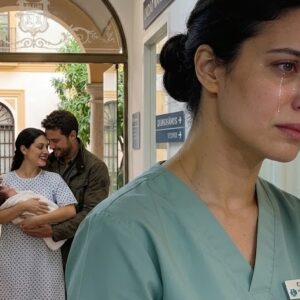
“Mi esposo me besó la frente y me dijo: «Italia. Solo un breve viaje de negocios». Horas después, al salir del quirófano, mi corazón se detuvo.”
La mañana en que mi esposo se inclinó, me besó la frente y dijo: “Italia. Solo un viaje de negocios rápido”, no lo cuestioné. Unas horas más tarde, al salir del quirófano, me di cuenta de que toda mi vida había sido…
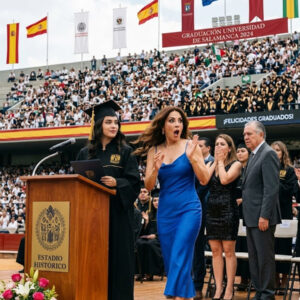
La corrieron de su casa a los 15 años por una mentira de su hermana gemela, pero 7 años después se vengó de la manera más elegante frente a miles: “Hoy le agradezco a mi verdadera madre…”
La pesada puerta de caoba de la casa en uno de los fraccionamientos más exclusivos de Guadalajara se cerró con un golpe seco, dejando a una niña de 15 años sola en la cochera, temblando bajo el viento helado de…

La prometida la acusó de maltrato y él le aventó billetes en la cara para silenciarla: “No te acerques a mi familia”. Pero un oscuro secreto guardado en el mandil de la sirvienta lo cambiaría todo.
El sonido de la cachetada retumbó en la inmensa sala de la mansión en Las Lomas, silenciando de golpe el murmullo de la televisión y helando la sangre de quienes estaban allí. —¿Tú crees que puedes tocar a mi suegra…
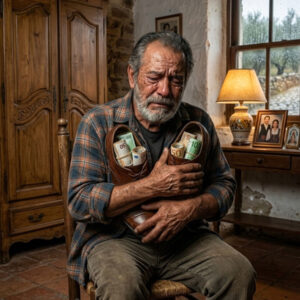
CUANDO MI HIJA SE CASÓ CON UN MILLONARIO Y ME ENVIÓ ZAPATOS EQUIVOCADOS, PENSÉ: “NO SOY UN MENDIGO PARA ACEPTAR TUS SOBRAS”. PERO AL ROMPERLOS DESCUBRÍ SU DOLOROSO SECRETO FAMILIAR.
El día que Ernesto, un carpintero de 62 años, recibió aquel paquete en su humilde taller en un pueblo de Jalisco, sintió que una aguja de hielo le atravesaba el pecho. La humillación ardió en su garganta al abrir la…
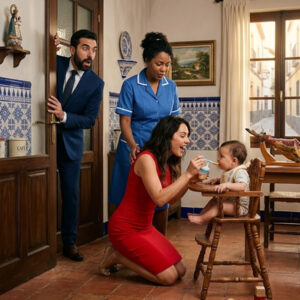
Regresó a casa de imprevisto y su nana lo escondió en el clóset: el escalofriante secreto de su prometida
Esa tarde, el tráfico en el Periférico de la Ciudad de México estaba insoportable. Alejandro, un magnate de bienes raíces, iba en el asiento trasero de su camioneta blindada, revisando contratos en su tableta, cuando el teléfono vibró. Era su…
“Sus Hijos La Abandonaron En Un Panteón Para Robar Su Imperio, Pero 2 Niños Huérfanos Desataron El Karma Más Implacable…”
El polvo reseco y ardiente de San Gabriel de los Agaves, en el corazón profundo de Jalisco, se levantaba con el viento de la tarde, golpeando sin piedad las cruces oxidadas del viejo panteón municipal. Mateo y Samuel, 2 gemelos…
End of content
No more pages to load