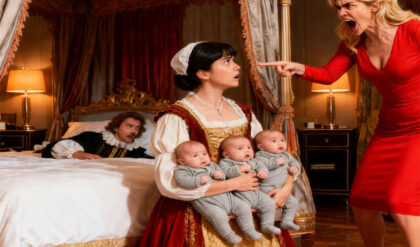
A poor girl, running late for school, finds an unconscious baby locked in a luxury car. She breaks the window and runs to the hospital. When she arrives, the doctor falls to his knees, weeping.
The streets of Buenos Aires blazed under the relentless midday sun as Patricia Suárez, a young woman of just sixteen, ran desperately toward her school. Her worn shoes pounded the pavement as she weaved through the crowd. It would be her third tardy of the week. The principal had made it clear: one more tardiness and her scholarship would be in serious jeopardy.

“I can’t lose her…” she murmured breathlessly, clutching the secondhand books she had worked so hard to buy. Her uniform, inherited from an older cousin, showed its age, but it was the best her family could afford. It was then, as they turned onto Libertador Avenue, that she heard him.
At first, she thought it was her imagination. Then the whimpering became clearer. It was coming from a black Mercedes parked in the blazing sun. Patricia stopped dead in her tracks. Through the tinted windows, she made out a small figure in the back seat. The crying had faded to a faint whimper, barely audible. Without thinking, she approached. The car was overheating, and in its car seat, a baby of about six months old was writhing weakly; its flushed skin glistened with sweat.
“Oh my God!” Patricia exclaimed, pounding on the window. She looked around for help, but the usually bustling street seemed deserted. The baby had just stopped crying; his movements were slowing. The decision was instantaneous. She picked up a piece of rubble, closed her eyes, and smashed it against the rear window. The glass shattered with a crash that seemed to echo through the entire street. The alarm blared, but Patricia, ignoring the cuts on her hands, reached through the opening to grab the little one.
Her fingers trembled as she struggled with the chair straps. The baby barely reacted, eyelids half-closed, breathing short and rapid. “Hold on, little one…” she whispered, finally managing to free him.
She wrapped him in her uniform jacket and, completely forgetting about classes, her books scattered on the sidewalk, and the wrecked car, she ran toward the nearest hospital. The five blocks to San Lucas Clinic seemed like the longest of her life. The baby’s weight increased with every step, her lungs burned.
Passersby stepped aside, some shouted, others pointed at the scene, but Patricia was only thinking about not tripping, about getting there in time. She burst into the emergency room like a whirlwind, her uniform stained with sweat and the blood from her cut hands. “Help!” she cried, her voice breaking. “Please, he’s in very bad shape.” The medical team reacted immediately. A nurse took the baby, and the doctors rushed over. Amid the commotion, Patricia saw a middle-aged doctor approach the little boy.
The man’s reaction was immediate. His knees buckled; he had to lean on a stretcher to keep from falling. “Benjamin…” he murmured, tears streaming down his cheeks. “My son.”
Patricia’s world stopped. The baby she had just saved was that doctor’s son. Questions raced through her mind as two police officers entered the emergency room. “Patricia Suárez?” one of them asked, advancing, his face serious. “Please come with us. An act of vandalism and a possible kidnapping have been reported.”
The doctor, regaining his composure, stepped between Patricia and the officers. His voice, trembling but firm, cracked: “This young woman just saved a life.” “My son, and I need to know exactly how he ended up in that car.”
The following hours were nothing but a whirlwind of interrogations and revelations. Seated in a small hospital office, her hands now bandaged, Patricia trembled beside a barely sipped glass of water. Across from her, Dr. Daniel Acosta, Benjamin’s father, listened for the third time to her account while the police took notes. “I heard crying as I drove by, that’s all.” “And then?” asked the youngest officer, Lucas Mendoza, with a skeptical look. “The car was in full sun, all the windows closed, nobody around,” Patricia replied, her voice tired but firm. “I tried to get help… then I understood the urgency.”
Dr. Acosta ran a hand over his face, exhausted. His son was now stable, being treated for hyperthermia, but the circumstances were becoming increasingly murky. “This morning, my wife Elena left Benjamin with the nanny,” he explained, his voice slightly breaking. “Teresa Morales. Three months with us, impeccable references. When I called home after the little boy was admitted, no one answered.”
The officers exchanged a glance. “The Mercedes was reported stolen an hour ago,” Mendoza stated. “Ms. Acosta found the rear door forced open. The nanny was missing, along with jewelry and documents.”
Patricia listened, trying to piece things together. Had the nanny tried to kidnap the baby? Then why abandon him in the car? Something didn’t add up. “Doctor,” Patricia ventured, “can I ask you something?” He nodded. “The car where I found Benjamin was locked from the inside, as if they wanted to make sure no one could get him out.”
Silence fell again. Dr. Acosta paled. “The locks on my Mercedes are automatic,” he murmured. “They only activate with the key or the remote.” “We need to retrieve the CCTV footage from the area. Right now,” Mendoza added, pulling out his phone.
When the police left the office, Dr. Acosta slumped in his chair, his face etched with worry. “Patricia,” he said gently, “I have to confess something. It might explain all of this.” She straightened up, sensing the change in his tone. “Two weeks ago, I received an envelope at my office. Photos—of Benjamin, of Elena, of our routines—and a note ordering me to stay out of a specific medical file.” “A file?” Patricia said, sensing they were entering deep waters. “I’m a key witness in a medical malpractice case against a very prestigious private clinic. My testimony could shut it down.” She stood and began pacing. “I thought I could handle it. We increased security. I hired Teresa after thorough vetting.”
There was a knock at the door. A nurse entered, looking worried. “Doctor, your wife is here. You must see something.” Elena Acosta, elegant despite her anguish, changed her expression when she saw Patricia. “Are you the young woman who saved my baby?” she asked, her voice breaking, before embracing her. Patricia nodded, surprised. But what Elena said next chilled the air. “Teresa is dead,” she announced, stepping back. “The police found her body in the trunk of her car, just a few blocks from our house.”
Dr. Acosta slumped in his chair, stunned. “Dead? How…” “And there’s more,” Elena continued, pulling a crumpled envelope from her purse. “They found this in her pocket: documents about the clinic, cases of negligence… It seems she was investigating on her own.”
Patricia watched them, seeing the pieces of the puzzle slowly fall into place. “The Mercedes,” she said suddenly, drawing everyone’s attention. “Why leave Benjamin in the doctor’s Mercedes? Why not in another car?” Dr. Acosta jumped up, a flash of evidence in his eyes. “Because they wanted us to think I’d forgotten him inside,” Elena whispered, horrified. “A doctor who testifies against negligence, negligent with his own child… They would have found him too late.” “And Teresa uncovered the plan,” Patricia concluded.
Another knock at the door: Mendoza, tablet in hand. “You have to see this.” The video showed two men intercepting Teresa near the Acosta house and forcing her into a vehicle. A few minutes later, the doctor’s Mercedes pulled out of the garage, driven by one of them. “We’ve identified a suspect,” the officer announced. “A former security guard at the clinic under investigation.” Dr. Acosta squeezed Elena’s hand, his expression grim. “This goes beyond simple negligence. And thanks to you, Patricia, they didn’t get away with it.”
Patricia looked down at her bandages. A simple academic delay had catapulted her into the heart of a conspiracy. “And now?” she asked. “Now, we protect everyone and unravel this viper’s nest,” Mendoza replied. “And we’ll talk to his school about his absence. He’s saved a life.” Elena approached, her face calmer. “He hasn’t just saved my son. Perhaps he’s helped bring to light something that will save other lives.” As if to confirm her words, Benjamin’s cry echoed in the next room: a loud, vigorous cry that made everyone smile and reminded them how close they had come to the worst. Patricia relaxed for the first time since leaving the black Mercedes. Many questions remained, but for now, that cry was enough for her to know she had done the right thing.
Night had fallen when Patricia returned home, escorted by a police officer. Her mother, Ana, was waiting for her on the doorstep, torn between worry and relief. The school had reported her absence, but the neighborhood was already buzzing with the news. “My brave daughter,” Ana whispered, hugging her tightly, while the officer explained the situation and the need for discretion. In the small kitchen, Patricia sat down while her mother prepared mate. The family ritual calmed her somewhat, although the images of the day kept replaying in her mind. “The principal called again,” Ana said as she poured the mate. “After finding out what you did, she withdrew the warning for your tardiness and wants to see you tomorrow.” Patricia nodded distractedly. Her phone vibrated: a message from Dr. Acosta. “Teresa left a letter. Can you come to the hospital tomorrow? There’s more to it than we thought.”
The next day dawned gray and threatening. Patricia first went to the high school where, against all odds, the principal greeted her with a hug and words of admiration. Even more surprising: Dr. Acosta had established a full scholarship in recognition of her actions. “Your courage has saved a life,” the principal said, “and has demonstrated exceptional character. The doctor insists: you deserve this opportunity.” With a heart full of conflicting emotions, Patricia then headed to the hospital. At the entrance, Elena was waiting for her, her face grave. “We’re receiving threats,” she explained as they walked toward the doctor’s office. “But what Teresa’s letter contains is even more disturbing.”
In the office, Dr. Acosta and Agent Mendoza were waiting for them. On the desk lay a handwritten letter and scattered documents. “Teresa wasn’t just a nanny,” the doctor began, his voice tired but firm. “She was an investigative journalist. She’d spent months following cases of medical negligence, connecting the dots that no one else saw.” Mendoza unfolded photos and evidence. “The clinic wasn’t just negligent: it was involved in medical fraud. Falsified results, unnecessary procedures, all for money.” “Why hire her as a nanny?” Patricia asked, though she already knew the answer. “Because she knew I was investigating,” the doctor replied. “She wanted to protect us, to be close. In her letter, she explains that she uncovered a plan to discredit me. I didn’t expect them to act so quickly or so brutally.”
Elena, silent until then, took the letter with trembling hands. “She left a USB drive,” Mendoza added. “But she wrote that she hid it ‘where secrets sleep without ever truly resting.’” A shiver ran through Patricia. “Benjamin’s room,” she whispered. “Babies sleep… but they never truly rest.” Elena’s eyes lit up. “The musical mobile, of course. Teresa was always winding it up. She said she’d never seen such a big music box.” “Because it wasn’t just that,” Patricia concluded.
A loud crash echoed down the hallway. A nurse burst in. “Doctor, your house is on fire!” The next few minutes were a chaotic flurry of sirens and people running around. By the time they arrived, firefighters were already battling the flames. “The fire is concentrated in the bedroom area,” Elena stammered, pale. “Benjamin’s room.” Patricia noticed a man in civilian clothes watching the scene with unnerving interest. When their eyes met, he turned away and fled. “Officer Mendoza!” Patricia called, pointing at him. The officer rushed over, calling for backup on his radio. In the midst of the commotion, Patricia remembered something she had noticed the day before in the room: the musical mobile above the crib. When the firefighters finally gave them permission to enter, the mobile was still there, tilted, intact thanks to its metal casing. Dr. Acosta carefully unscrewed the base. Inside, perfectly concealed, was the USB drive. “Teresa had thought of everything,” he murmured, holding the small object like a treasure.
Mendoza returned; his colleagues had intercepted the fugitive. He secured the memory. “The fire was clearly arson, aimed at the room and any evidence,” Patricia pointed out. “They hadn’t counted on Teresa’s resourcefulness,” Elena said, placing a hand on Patricia’s shoulder. “Or on the courage of a student willing to break a window.” “The man arrested works for the clinic,” Mendoza announced. “He’s already started talking. With this memory and his testimony, we can bring down the whole network.” Dr. Acosta turned to Patricia. “There’s something else. Teresa left instructions… about you.”
Patricia’s heart skipped a beat. “About me? But he didn’t even know me.” “Not you personally,” the doctor replied, “but I knew someone like you would appear; someone who would do the right thing, no matter the cost.” In the smoke-filled but passable room, they opened a second envelope. “If you’re reading this, it means my suspicions were well-founded and I’m no longer here,” Teresa wrote. “It also means that someone—a brave soul—has saved Benjamin from the trap. To that person, I ask one last favor. Negligence is only the visible part. They’re experimenting with unapproved treatments on vulnerable patients: poor families, people without resources. The evidence is in our memories, but also elsewhere.”
“At the municipal cemetery,” the letter continued. “Tomb 342, section D. Under Maria Gonzalez’s headstone, a sealed package. My life insurance… or rather, my death insurance.” “Do you want me to go?” Patricia whispered. “Officially, we can’t send the police,” Mendoza explained. “The security company is watching us. We’d be spotted immediately.” “But a student going to pay her respects…” Patricia finished. “You’re not obligated,” Elena interjected. “You’ve already risked enough.” Patricia thought of Benjamin, of all the families perhaps victims without knowing it. “I’ll do it,” she said. “But I’ll need help.”
The plan was quickly established. The next day, after school, Patricia would go to the cemetery with a bouquet. Mendoza would stay nearby, in civilian clothes. Elena lent her a simple black dress. That night, Patricia barely slept. Her mother tried to dissuade her, but then understood. “Your father would be proud,” Ana said, kissing her. “He always said that true courage is doing the right thing, even when you’re afraid.” The next day dragged on endlessly. When the bell rang, Patricia changed. Elena’s dress was a little too big, but it would do. In the mirror, she barely recognized the young woman before her. The vast, ancient municipal cemetery cast its shadows beneath centuries-old trees. From the entrance, Patricia saw officers in black patrolling the aisles. She followed the memorized route to section D, pausing occasionally to read names, pretending to be a grieving visitor. A guard noticed her and approached. “Do you need any help, miss?” Patricia’s heart stopped for a moment, but she kept her composure. “No, thank you,” she replied, her voice a little shaky. “I miss my grandmother.” The guard nodded without moving away. Then a voice called from the entrance: “Sir, we need help!” He hesitated and then hurried off: Mendoza’s distraction. Patricia bent down and found the compartment described. A sealed package the size of a book. She slipped it into her bag, dried the tears she hadn’t felt flowing, and walked away with measured steps. Only when she turned the corner did she start running.
At the café a few blocks away, Elena and the doctor were waiting for her. “Do you have it?” Elena whispered. Patricia nodded, taking out the package. Inside: a notebook, a USB drive, photos, and a final letter. “The real mastermind isn’t the clinic,” Dr. Acosta read, pale. “It’s someone well-known and respected, who’s been covering up these crimes for years: Dr. Carlos Montiel, director of the municipal hospital.” Elena choked back a sob. The doctor paled. “Carlos… my mentor,” he whispered. The photos showed Montiel with pharmaceutical executives, destroying documents at night, secretly transferring patients. “That’s why they wanted to discredit you,” Patricia murmured. “Your testimony would have exposed everything.” “And that’s why they targeted Benjamin,” Elena added.
The doctor’s phone rang. The name on the screen took their breath away. “Dr. Carlos Montiel,” Mendoza whispered, activating the recording and speakerphone. “Daniel, my son,” Montiel’s voice crooned. “What a scare about the little boy… How lucky that young woman was there. By the way, any news of Teresa? Strange disappearance, isn’t it? Let’s have dinner tonight, like before. Eight o’clock. Come alone.” A trap… but an opportunity. “With pleasure, Carlos,” the doctor replied. “Our usual restaurant.” “Perfect.” “It’s too dangerous,” Elena protested. “You can’t go.” “He must go,” Mendoza declared. “But he won’t be alone.” “Nothing too visible,” Patricia chimed in. “He has eyes everywhere. We need something more discreet.”
At night, El Dorado restaurant was bustling. Patricia, wearing a borrowed waitress uniform—she sometimes helped out at her aunt’s café—moved between the tables. At 8:00 p.m., Dr. Acosta settled into a corner. A few minutes later, Montiel came in. Patricia approached to take the order, her phone recording in her apron pocket. Mendoza and his team waited around the corner, tracking a hidden microphone. “Daniel, young man,” Montiel said patronizingly. “You’re venturing into matters that don’t concern you. Is it worth risking everything? Your career, your family…” The veiled threat almost made Patricia’s tray tremble. She moved closer to hear better. “Funny you mentioning my family,” the doctor replied. “Especially after what happened to Benjamin.” “A terrible accident,” Montiel sighed. “These things happen. Children are just as vulnerable as the patients you send to the clinic.” The silence turned glacial. Patricia, wiping down a nearby table, held her breath. “Careful, Daniel,” Montiel’s voice hardened. “Don’t make accusations you can’t prove.” “Oh, but I can,” the doctor retorted, pulling out an envelope. “Teresa left a gift.” Montiel’s mask cracked. His hand slid toward his jacket: the signal. “Now!” Patricia shouted, dropping her tray.
It all happened so fast. Mendoza and his team burst in. Montiel tried to pull something out of his jacket; two officers had already tackled him. “Dr. Carlos Montiel, you are under arrest for conspiracy, criminal negligence, and the murder of Teresa Morales,” Mendoza declared. The stunned customers watched the respected director in handcuffs. Patricia joined the doctor, who looked as if he had aged ten years. “It’s over,” she whispered to him. As they left, Montiel stopped and turned to face them. “You’re just like your father, Daniel,” he spat. “He also believed he could change things. Remember what happened to him?” The doctor paled. Patricia didn’t have time to ask questions: Elena burst into the restaurant. “Daniel, Benjamin is having a seizure! The doctors don’t understand what’s happening.” Montiel’s smile as they led him away chilled Patricia to the bone. It wasn’t over.
At the hospital, everything was a hive of activity. Dr. Acosta rushed to the emergency room, where a team surrounded the small body convulsing. “His vitals are dropping!” a nurse shouted. “Full toxicology report, right now,” the doctor ordered, putting on gloves. Patricia, at the door, watched, her heart pounding. Elena clung to the doorframe. “This isn’t normal,” the doctor murmured, examining Benjamin’s eyes. A horrible thought struck him. “The day my father died… same symptoms.” “Your father?” Elena whispered. “He was a doctor too. He studied the side effects of experimental drugs. The night he died, it was the same.” Patricia felt a chill, remembering Montiel’s words. “They said it was a heart attack,” the doctor interrupted. “I need today’s visitor log. Who’s been in here?” A nurse returned with the log: a maintenance visit, air conditioning check. “Maintenance?” Elena frowned. “No one requested a checkup.” “The uniform,” Patricia whispered. “When I arrived, I saw someone rushing off.” “Blood sample and camera footage, right now,” the doctor snapped. Near the window, Patricia noticed a small, empty vial, almost invisible behind the curtain. She picked it up with a handkerchief. “Doctor.” He examined the vial in the light. His eyes widened. “The same compound that was in my father’s body.” “Can you treat it?” Elena asked, her voice trembling. “Yes,” he replied firmly. “Because I’ve spent fifteen years secretly studying this poison. I knew that one day, they would try it again.” It was a race against time. Dr. Acosta administered the antidote he had developed. Gradually, the convulsions stopped.
“Doctor,” Mendoza called from the doorway. “We have the footage… and something else.” In the security room, the video showed the man in a maintenance uniform entering Benjamin’s room. Turning toward the camera, Elena choked back a scream. “Roberto,” the doctor whispered. “My father’s former assistant. Disappeared after his death.” “We’ve arrested him,” Mendoza confirmed. “He was trying to leave town. And he had this.” On the table lay old files: experiments from fifteen years prior, signed by Montiel and Dr. Jorge Acosta, Daniel’s father. “His father discovered they were using patients as guinea pigs,” Mendoza explained. “When he threatened to expose it, Montiel ordered his elimination. Roberto carried it out.” “And they tried to do the same to Benjamin,” Patricia murmured. “Not just him,” Mendoza corrected. “Roberto has confessed: the target was the whole family. The poison, in low doses, was in the house’s water.” Teresa noticed the first signs.” Elena brought her hands to her mouth. “That’s why she offered to take care of the child,” the doctor concluded, his voice breaking. “To protect us. And it cost her her life.” In the room, Benjamin slept peacefully, his breathing regular. Dr. Acosta held his hand, his eyes filled with tears. “My father’s legacy,” he murmured. “I thought he had died in vain. But his research has saved my son. And thanks to Teresa, justice will be served.” Elena hugged Patricia. “And thank you, for having the courage to break that window. Without you, we would never have discovered the truth.” At dawn, the light promised a new day, and the hope of long-awaited justice.
A month later, Patricia was in court when the judge pronounced the sentence against Montiel and his accomplices. Elena held a completely healthy Benjamin. Dr. Acosta squeezed his wife’s hand. Criminal conspiracy, criminal negligence, the murders of Teresa Morales and Dr. Jorge Acosta. “This court finds Carlos Montiel guilty,” the judge said. His words closed a dark chapter. Roberto had confessed everything, providing evidence that covered decades of illegal experiments and cover-ups. As they left, Dr. Acosta turned to Patricia. “My father used to say that true medicine isn’t in treatments, but in the hearts of those who care for others. You proved that by saving Benjamin.” “I only did what anyone would have done,” she replied. “No,” Elena corrected, cradling Benjamin. “You did what few would have dared.” And you brought the truth to light: about Benjamin, about Daniel’s father, about Teresa, about all those silenced patients.” “The investigation continues,” Mendoza added. “Every day we find more victims.” And it all started because a student broke a window. Ana, Patricia’s mother, joined them. “Your father used to say…” “…that true courage is doing the right thing, even when you’re afraid,” Patricia finished. Dr. Acosta pulled out an envelope. “The scholarship is just the beginning. Elena and I want to help you fulfill your dream.” Patricia opened it, trembling. An acceptance letter to a special medical program. “But… how did you know?” Elena smiled. “Teresa wrote it in her last letter. You had confided in her that you wanted to be a doctor. She believed in you. We do too. The program is demanding,” the doctor added, “but I’m sure you’ll be one of those who heal bodies and stand up for the truth.” Tears streamed down Patricia’s cheeks. Benjamin, laughing, reached out to her. She took it, marveling at all that a single act of courage had set in motion. “True heroes don’t seek to be heroes,” the doctor’s father used to say. “They simply do the right thing when the moment arises.” “And sometimes,” Elena added, “those moments lead us exactly where we need to be.”
A year later, Patricia walked the halls of the medical school, books clutched to her chest—just like the day she ran to high school, but this time her face was filled with determination. In her locker, next to her schedule, was a photo: her and the Acosta family. Benjamin was on her lap, all smiles. Beside it, a handwritten note from Teresa, found among her things: Sometimes, the smallest acts of courage bring about the greatest changes. Trust your heart. Patricia touched the paper, remembering everything that had followed the moment she decided to break a window: lives intertwined, truths revealed, justice delivered. As she headed to her next class, she knew she had found her path: she would be a doctor—the kind Teresa would have wanted—healing bodies and upholding truth and justice. Benjamin, for his part, would not remember that terrible day. But his family would never forget the student who did the right thing, against all odds, and changed their lives forever. Thus, that impulsive gesture became much more: a lesson about the power of courage, the importance of truth, and how a simple act of kindness can trigger a cascade of changes that touch our lives and the lives of everyone around us.
News

El Hombre Adinerado Fingió Irse De Vacaciones… Pero Lo Que Presenció Entre Su Criada Y Sus Hijas Lo Dejó Conmocionado…
El millonario apagó las luces de su mansión, tomó su maleta y se despidió de sus hijas con una sonrisa tranquila. “Tengo que viajar unos días”, les dijo. “Pórtense bien.” Las niñas lo abrazaron sin sospechar nada, pero lo que…
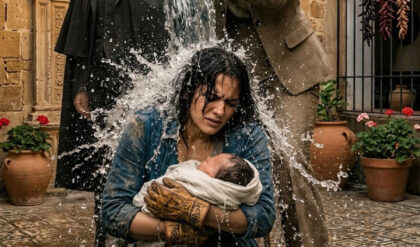
Le Echó Agua Helada A Una Madre Con Su Bebé… Y Jesús Le Dio Una Lección Que Jamás Olvidará…
Sobre ellos miró hacia abajo con desprecio. “¿Cuántas veces tengo que decirte que no te pares frente a mi casa?”, gritó la señora Patricia Vega, dueña de la casa de dos pisos en la colonia Jardines de Morelos en Ecatepec….
Pagó Fortunas Para Curar A Sus Hijos… Pero La Verdad La Destapó La Criada…
A las 3:07 de la madrugada, el pasillo del ático parecía contener la respiración. Las luces blancas del hotel no iluminaban, cortaban. Cada foco era un cuchillo frío sobre la alfombra gris. Y el silencio, ese silencio raro de las…

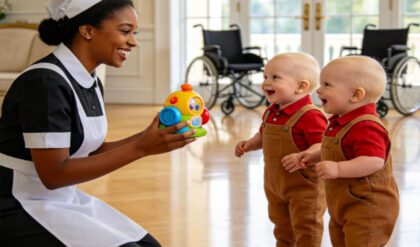
El Hombre Adinerado Instaló Cámaras Para Vigilar A Sus Gemelos Discapacitados —Lo Que La EMPLEADA NEGRA Hizo Shockeó…
Richard Blackstone casi derrama el whisky de $3,000 cuando vio la escena en el monitor de su oficina. Le temblaban las manos mientras sostenía el móvil y observaba a través de la aplicación de seguridad lo que ocurría en la…
EL BEBÉ MILLONARIO NO COMÍA NADA, LA LIMPIADORA LE DIO LECHE MATERNA Y SE SALVÓ…
El bebé millonario no comía nada. La limpiadora le dio leche materna y se salvó. El bebé del hombre más rico de Madrid llevaba 5co días sin comer y nadie sabía que esa noche moriría en mis brazos. Esas fueron…

El Millonario Volvió A Casa Abatido… Y Quedó Helado Al Ver Lo Que La Empleada Hizo A Sus Hijos…
El sonido llegó antes que la imagen. No fue un grito de auxilio, no fue el ruido seco de una puerta, fue una risa, una risa abierta, desordenada, viva. Julián Valdés se quedó inmóvil dentro del auto, con la mano…
End of content
No more pages to load